India's GaganYaan Mission: ISRO's Bold Step into Human Spaceflight
India's space program is taking a historic leap with the GaganYaan mission—the country's first human spaceflight program. The Indian Space Research...
By Propagation Team on 3/5/2025
- GaganYaan
- ISRO
What is GaganYaan?
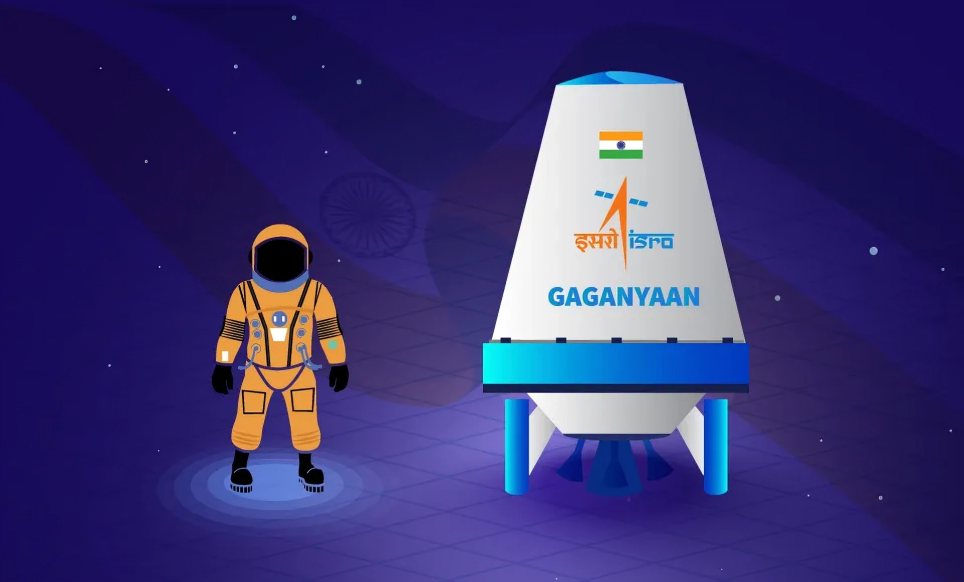
GaganYaan, meaning "Sky Vehicle" in Hindi, is India's indigenous human spaceflight program. The mission aims to demonstrate India's capability to send astronauts to low Earth orbit and return them safely to Earth. This milestone project will make India only the fourth nation to independently launch humans into space, after Russia, the United States, and China.
Mission Timeline and Progress
The GaganYaan program was officially announced by Prime Minister Narendra Modi during his Independence Day address in 2018. While initially targeted for launch around 2022, the timeline has shifted due to technical challenges and the global pandemic.\ As of recent updates, ISRO is planning the crewed mission launch for 2025. Before this main mission, ISRO has scheduled several test flights:
- Uncrewed test missions are planned to validate all systems before human flight
- The Test Vehicle Abort Mission-1 (TV-D1) was successfully completed in October 2023
- Additional abort tests are underway to ensure crew safety systems function properly
Technology and Innovation
The GaganYaan spacecraft consists of two main modules:
Crew Module: A habitable space with life support systems where the astronauts will live during their journey. It features:
- Environmental Control and Life Support Systems (ECLSS)
- Crew escape systems for emergency abort scenarios
- Advanced displays and controls
Service Module: Contains propulsion, power, and supporting systems needed for the mission.
The spacecraft will be launched aboard ISRO's most powerful rocket, the LVM3 (formerly GSLV Mk III), which has proven its reliability in multiple missions, including the Chandrayaan lunar missions.
Astronaut Training
Four Indian Air Force pilots were selected as the first group of GaganYaan astronaut candidates. They have undergone extensive training, including:
- Initial training in Russia to build fundamental spaceflight skills
- Specialized training at the Astronaut Training Facility in Bangalore
- Experience with microgravity environments
- Spacecraft systems familiarization
- Emergency response protocols
These astronauts will become India's first "Vyomanauts" (from the Sanskrit word for space).
Scientific Goals
Beyond demonstrating human spaceflight capability, GaganYaan will conduct scientific experiments in orbit, including:
- Microgravity research with potential applications in medicine and materials science
- Space biology experiments
- Earth observation
- Technology demonstrations for future missions
Long-term Vision
GaganYaan is not just a single mission but the beginning of India's human spaceflight program. ISRO has outlined plans for:
- Establishing an Indian space station by 2035
- Developing sustainable human presence in space
- Building infrastructure for deep space exploration
- Expanding international space collaboration
National Significance
The GaganYaan mission represents:
- India's technological growth and self-reliance in space capabilities
- Inspiration for a new generation of scientists and engineers
- Potential economic benefits through technology spinoffs
- Enhanced national prestige and soft power
International Collaboration
While GaganYaan is primarily an indigenous effort, ISRO has engaged in selective international cooperation:
- Training support from Russia's Roscosmos
- Technical consultations with space agencies including NASA and ESA
- Sharing of best practices in human spaceflight safety
As India reaches for the stars with GaganYaan, the mission stands as testimony to the nation's growing technological prowess and ambitious vision for space exploration. When Indian astronauts finally orbit Earth in an Indian spacecraft, it will mark not just a scientific achievement, but a defining moment in the nation's journey toward becoming a comprehensive space power.