AI in Space: How Artificial Intelligence is Powering Space Missions
Discover how AI is revolutionizing space missions — from autonomous spacecraft to astronomical discoveries. Learn how Propagation helps students and...
By Propagation Team on 20/7/2025
- Physics
- AI
## Introduction
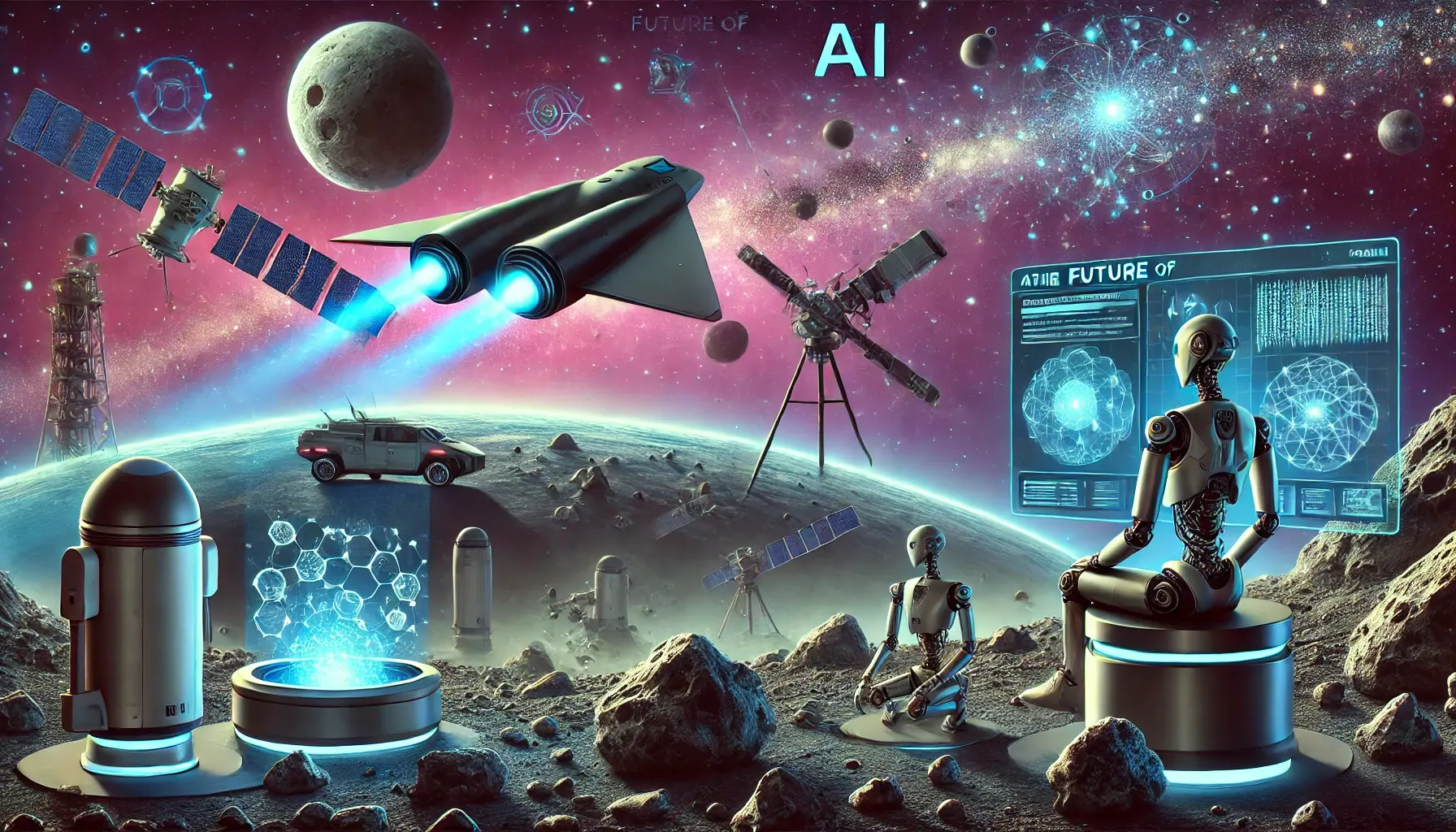
The cosmos has never been more accessible. As we stand on the precipice of a new space age, artificial intelligence has emerged as the invisible force propelling humanity's greatest adventures beyond Earth's atmosphere. From the dusty surface of Mars to the edge of our solar system, AI in space science is transforming how we explore, understand, and navigate the universe.
Modern space missions are no longer just about human ingenuity and mechanical precision—they're about intelligent systems that can think, adapt, and make split-second decisions millions of miles away from their creators. This technological revolution is making space exploration more efficient, cost-effective, and scientifically productive than ever before.
At the forefront of this educational revolution is Propagation, a leading platform that empowers students and researchers to bridge the gap between artificial intelligence and space science. By making these cutting-edge fields accessible to the next generation of explorers, Propagation is cultivating the minds that will shape humanity's future among the stars.
AI Applications in Space Missions
Satellite Data Processing
Every day, Earth observation satellites generate terabytes of data, capturing everything from weather patterns to urban development. AI space technology has revolutionized how we process this information deluge. Machine learning algorithms can automatically identify cloud formations, track deforestation, monitor agricultural yields, and even predict natural disasters by analyzing satellite imagery in real-time.
The European Space Agency's (ESA) Sentinel satellites, part of the Copernicus program, utilize AI algorithms to process vast amounts of Earth observation data, enabling rapid response to environmental changes and supporting climate research worldwide.
Autonomous Navigation for Spacecraft
How AI is used in space missions becomes particularly evident in autonomous navigation systems. When radio signals take up to 24 minutes to travel between Earth and Mars, real-time human control becomes impossible. AI-powered navigation systems enable spacecraft to make independent decisions about course corrections, obstacle avoidance, and landing procedures.
NASA's Mars Science Laboratory mission, which delivered the Curiosity rover, employed sophisticated AI algorithms for its autonomous landing sequence—a complex maneuver dubbed "seven minutes of terror" that required the spacecraft to make numerous critical decisions without human intervention.
Predictive Maintenance of Space Equipment
Space missions represent investments of billions of dollars and years of preparation. AI systems continuously monitor spacecraft health, predicting equipment failures before they occur. By analyzing patterns in sensor data, temperature fluctuations, and system performance metrics, artificial intelligence in astronomy and space missions helps extend mission lifespans and prevent catastrophic failures.
The International Space Station (ISS) employs AI-driven predictive maintenance systems to monitor everything from life support systems to solar panel efficiency, ensuring the safety of astronauts and the continuity of scientific research.
Space Debris Tracking
With over 130 million pieces of space debris larger than one millimeter orbiting Earth, collision avoidance has become critical for space missions. AI algorithms process tracking data from ground-based radars and optical sensors to predict debris trajectories and calculate collision probabilities, automatically generating avoidance maneuvers when necessary.
The European Space Agency's Space Surveillance and Tracking program uses machine learning to improve debris orbit predictions and enhance the safety of active satellites and crewed missions.
Mars Rovers and Planetary Exploration
Mars rovers represent perhaps the most visible application of AI in space exploration. These robotic geologists must navigate treacherous terrain, select scientifically interesting targets, and conduct experiments autonomously. NASA's Perseverance rover uses AI to identify rocks that might contain signs of ancient microbial life, automatically prioritizing samples for collection and analysis.
The rover's PIXL instrument employs artificial intelligence to map the chemical composition of rock surfaces at the microscopic level, dramatically accelerating the pace of geological discovery on the Red Planet.
Artificial Intelligence in Astronomy
Telescope Image Analysis
Modern telescopes generate astronomical amounts of data—literally. The Vera Rubin Observatory, set to begin operations soon, will photograph the entire southern sky every three nights, producing 20 terabytes of data daily. AI algorithms automatically classify galaxies, identify supernovae, detect gravitational lensing events, and catalog millions of celestial objects with unprecedented speed and accuracy.
The Sloan Digital Sky Survey has used machine learning algorithms to classify over 100 million galaxies and stars, creating the most comprehensive three-dimensional map of the universe ever constructed.
Exoplanet Detection
The search for worlds beyond our solar system has been revolutionized by AI. Algorithms trained on data from NASA's Kepler and TESS missions can identify the subtle dimming patterns that indicate a planet crossing in front of its host star. These systems have discovered thousands of exoplanets, including some in the habitable zones of their stars where liquid water might exist.
Google's machine learning algorithms, working with NASA data, have identified previously overlooked exoplanets, including Kepler-90i, making Kepler-90 the first known eight-planet system outside our own.
Signal Recognition in SETI
The Search for Extraterrestrial Intelligence (SETI) generates massive amounts of radio telescope data that must be analyzed for potential artificial signals. AI algorithms can distinguish between natural cosmic phenomena and potentially artificial signals, filtering out terrestrial interference and identifying patterns that might indicate intelligent origin.
Breakthrough Listen, one of the most ambitious SETI programs, employs machine learning to analyze millions of stars for techno signatures, dramatically expanding our capability to search for evidence of technological civilizations.
Galaxy Classification and Star Mapping
Understanding the structure and evolution of the universe requires classifying billions of galaxies and mapping stellar populations. AI systems can identify galaxy types, measure distances through photometric redshift estimation, and track stellar evolution across cosmic time scales.
The Gaia mission, mapping over one billion stars in our galaxy, uses AI to process astrometric data, creating the most precise three-dimensional map of the Milky Way ever produced.
Why AI Matters in the Future of Space Exploration
The exponential growth of space data presents both unprecedented opportunities and formidable challenges. Future missions to Jupiter's moons, Saturn's rings, and even interstellar space will generate data volumes that exceed human analytical capabilities. Artificial intelligence in space science is not just helpful—it's essential for unlocking the scientific potential of these ambitious endeavors.
Deep space missions face communication delays measured in hours or even years. AI systems must operate independently for extended periods, making complex decisions about scientific priorities, resource allocation, and mission safety. The scalability of AI solutions means that as our exploration capabilities expand, our ability to extract meaningful insights grows proportionally.
Consider the James Webb Space Telescope, which generates such detailed infrared images that human astronomers could spend lifetimes analyzing just a fraction of its data. AI algorithms can process these images in near real-time, identifying the most scientifically significant targets and optimizing observation schedules to maximize scientific return.
Future Mars missions planning human settlements will rely on AI for everything from life support management to resource extraction. These systems must demonstrate reliability and decision-making capabilities that exceed human performance in the harsh environment of space.
How Propagation is Bridging the Gap
While the applications of AI in space missions continue to expand, there remains a significant gap between these cutting-edge developments and educational accessibility. Propagation addresses this challenge by creating pathways for students and early-career researchers to engage directly with AI space technology through hands-on projects and research opportunities.
Citizen Science Asteroid Search Programs
Propagation coordinates citizen science initiatives that allow participants to contribute to real asteroid discovery and tracking projects. Using AI-assisted image analysis tools, students learn to identify potentially hazardous near-Earth objects while contributing to planetary defense efforts. These programs democratize space research, allowing anyone with curiosity and dedication to participate in protecting our planet.
AI-Based Workshops for Astronomy
Through interactive workshops, Propagation introduces students to machine learning applications in astronomy. Participants work with actual telescope data, training neural networks to classify galaxies, detect exoplanets, and analyze stellar spectra. These hands-on experiences bridge theoretical knowledge with practical skills, preparing students for careers in the rapidly evolving field of AI-driven space science.
Research Projects and Mentorship Programs
Propagation connects students with experienced researchers working on cutting-edge AI space projects. These mentorship opportunities provide access to real research challenges, from improving satellite image analysis algorithms to developing new methods for space debris tracking. Students gain valuable experience while contributing to advancing our understanding of the universe.
The platform's research projects span multiple disciplines, allowing students to explore how artificial intelligence intersects with astrophysics, planetary science, and space engineering. This interdisciplinary approach reflects the collaborative nature of modern space exploration and prepares participants for the complex challenges they'll face in their careers.
Conclusion
Artificial intelligence has fundamentally transformed space exploration, evolving from a supporting technology to an indispensable partner in humanity's quest to understand the cosmos. From the autonomous systems guiding rovers across Martian landscapes to the algorithms discovering new worlds around distant stars, AI in space science continues to push the boundaries of what's possible.
The integration of artificial intelligence in astronomy has accelerated the pace of discovery while enabling us to tackle scientific questions that were previously beyond our reach. As we prepare for even more ambitious missions to the outer planets and beyond, AI space technology will remain crucial for managing complexity, processing vast datasets, and making critical decisions in environments where human intervention is impossible.
The future of space exploration belongs to those who understand both the infinite possibilities of the cosmos and the transformative power of artificial intelligence. Platforms like Propagation are essential for nurturing this understanding, providing the educational foundation necessary for the next generation of space scientists and engineers.
Whether you're a student fascinated by distant galaxies, a researcher interested in planetary science, or simply someone captivated by the possibilities of space exploration, the intersection of AI and space science offers unprecedented opportunities for discovery and innovation. By joining educational platforms like Propagation, participating in citizen science projects, and staying informed about the latest developments in AI space technology, you can be part of humanity's greatest adventure.
The stars are no longer distant lights in the night sky—they're destinations. And artificial intelligence is helping us chart the course to reach them. Join the journey, and help shape the future of space exploration through the powerful combination of human curiosity and artificial intelligence.
"Ready to explore the cosmos through the lens of artificial intelligence? Follow Propagation for upcoming events, internships, and research opportunities that will prepare you for a career at the forefront of space science and AI innovation".