Exploring Astrobiology: The Science of Life Beyond Earth
Have you ever gazed at the night sky and wondered if there's life on other planets? You're not alone. That exact curiosity is what fuels the exciting world...
By Propagation Team- Komal Yadav on 6/8/2025
- Astrobiology
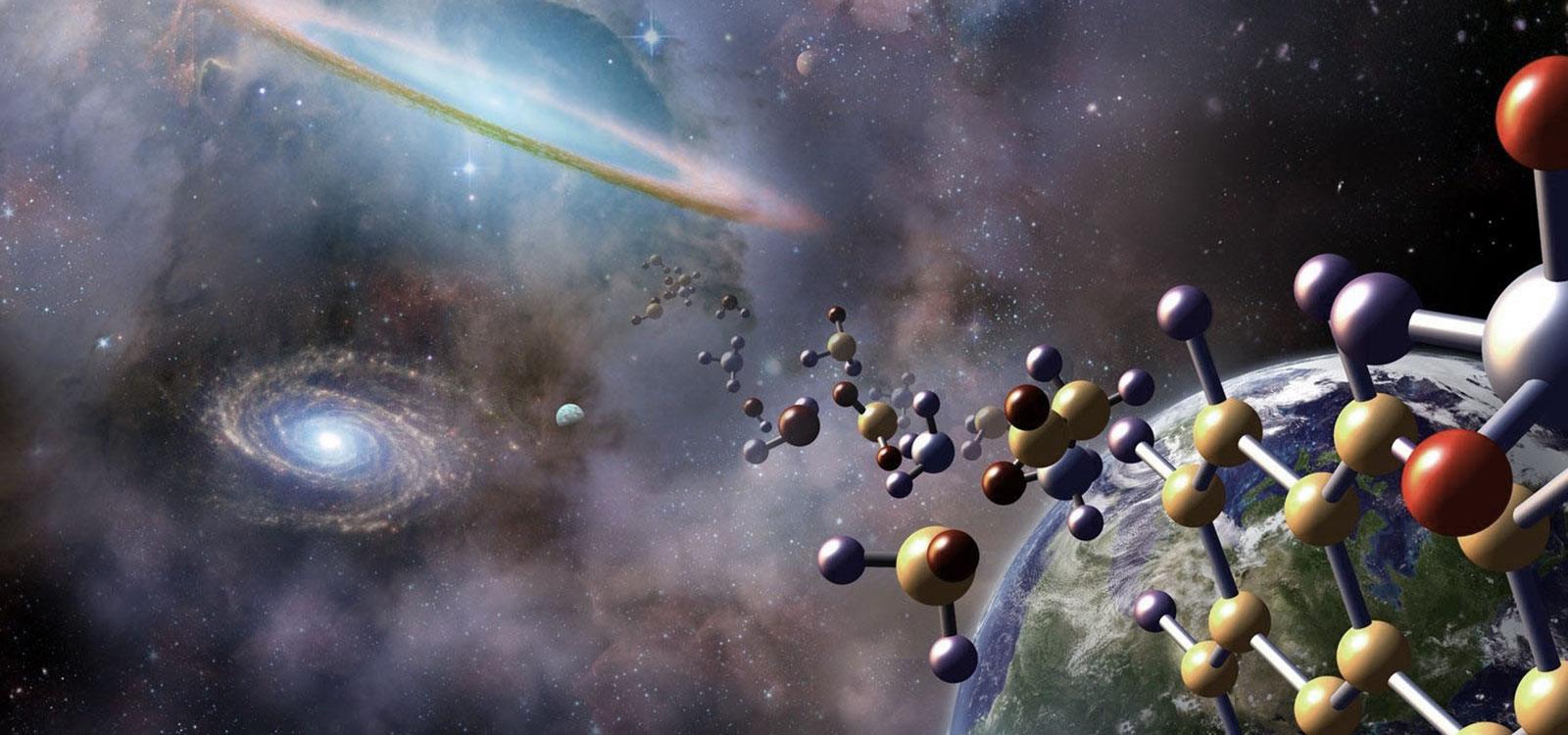
A Journey That Begins on Earth
Astrobiology starts here—right on Earth. To understand alien life, we first need to understand life in its most extreme forms on our own planet. For example, scientists study extremophiles—tiny life forms that live in boiling hot springs, highly acidic lakes, and even deep under the ocean where sunlight never reaches. These unique organisms show us that life can exist in places once thought impossible. One such place is the Atacama Desert in Chile, considered one of the driest places on Earth. Yet, researchers found microbes living beneath the surface, proving that even the harshest environments could support life.
Another great example is Antarctica's Lake Vostok, buried under kilometers of ice. Scientists believe the subglacial water may harbor life forms that have adapted to complete darkness and extreme cold. These Earth-based "alien-like" habitats act as testbeds for studying potential life on Mars, Europa (a moon of Jupiter), or Enceladus (a moon of Saturn).
From Classrooms to Cosmos
What's truly amazing is that you don't need to be a space scientist to start exploring astrobiology. Students from a variety of backgrounds—like biology, biotechnology, chemistry, physics, or computer science—can dive into this field. A simple B.Sc. in any of these subjects can be the first step. Then comes specialization through M.Sc. programs, internships, and online courses.
Institutes such as the Indian Astrobiology Research Centre (IARC) offer workshops and online projects, while global institutions like NASA's Astrobiology Institute, SETI Institute, and Blue Marble Space Institute of Science (BMSIS) offer virtual internships, fellowships, and even chances to publish research.
Take for example Aarav, a biotech undergrad from Pune who got curious about life on Mars. He joined a virtual IARC workshop, collaborated on a project simulating Martian soil, and later co-authored a paper about plant growth in extreme conditions. Or Meera, a physics major, who used AI tools to analyze atmospheric data from exoplanets. With guidance from a mentor at BMSIS, she helped identify patterns that could hint at biosignatures—signs of possible life.
The Tools of the Trade
Astrobiologists use a wide range of tools. They might grow extremophiles in simulated Mars-like conditions, analyze images from spacecraft to spot strange surface features, write code to detect chemical signatures in planetary atmospheres, or search radio signals for alien transmissions.
You could be sitting in your room using your laptop to help classify galaxies or planets through citizen science platforms like Zooniverse. It's that accessible.
What Lies Ahead?
The next few decades in astrobiology are set to be revolutionary. Missions like NASA's Dragonfly will send a drone to explore Titan's surface, a moon of Saturn, while ESA's ExoMars mission focuses on detecting biosignatures in Martian soil. ISRO's Mars Orbiter Mission 2 and Gaganyaan human spaceflight program will also contribute valuable data. And of course, the James Webb Space Telescope is already scanning distant planets' atmospheres for traces of water, methane, and oxygen.
These missions will bring us more data than ever before—and AI will help analyze it. This gives rise to a new subfield called astroinformatics, where machine learning models are trained to detect patterns, classify planets, and even predict habitable zones.
So Why Should You Care?
Because astrobiology is not just about looking up at the stars—it's about understanding our own place in the universe. It teaches us how rare and precious life is. It connects dots between different branches of science. And most importantly, it invites people from all walks of life to participate.
You might be the student who designs a better biosignature detector. You might be the coder who writes a program that finds a habitable exoplanet. You might be the scientist who discovers microbial life under Martian ice.
Or, like many, you might just be someone whose sense of wonder takes them on a journey through this magical universe of possibilities.
Astrobiology isn't just science—it's a story we're writing together. And your chapter is waiting.
🚀 Join the Journey with Propagation
Ready to turn your curiosity about astrobiology into real research experience? This is where Propagation comes in—bridging the gap between wonder and actual scientific contribution.
What is Propagation?
Propagation is a learning and research platform dedicated to advancing education and innovation in Space Science, Artificial Intelligence, and Bioinformatics. We empower students, enthusiasts, and young researchers by connecting them with leading scientists, educators, and industry experts—making astrobiology accessible to anyone with the passion to explore.
How Propagation Advances Astrobiology Research
Just like the students Aarav and Meera mentioned earlier, Propagation participants are actively contributing to astrobiology research. Through our platform, you could find yourself:
- Analyzing real exoplanet data
using AI tools to identify potential biosignatures
- Collaborating on extremophile research
with scientists studying life in Mars-analog environments
- Contributing to citizen science projects
that help classify potentially habitable worlds
- Developing computational models
to predict where life might exist in our galaxy
- Working with space mission data
from current and upcoming astrobiology missions
🔍 Our Services & Highlights
We provide comprehensive workshops and training programs that range from basic astrobiology concepts to advanced astroinformatics. Our expert lectures and interactive sessions give you direct access to leading astrobiologists and space scientists. Through research-based learning projects, you gain hands-on experience with real astrobiology challenges, while our virtual and remote internship opportunities let you work alongside research teams worldwide. We also offer certification programs to build credible expertise in astrobiology and related fields, complemented by student mentorship and career guidance to help navigate your path from curiosity to career. Our global citizen science campaigns enable you to contribute to actual discoveries from anywhere, and through hackathons, challenges, and projects, you can solve real problems facing astrobiology today.
🌌 Domains We Cover
In Space Science, we focus on astronomy, astrophysics, cosmology, astrobiology as our core connecting field, and rocket science. Our Artificial Intelligence and Machine Learning domain includes AI tools and applications for space data analysis, real-world ML projects in astrobiology, and data science fundamentals for astronomical datasets. In Bioinformatics, we cover genomic data analysis for extremophile research, molecular biology with AI for astrobiology applications, and research tools and pipelines for life detection.
Your Astrobiology Journey Starts Here
🌱 Whether you're a student inspired by the possibility of life on Mars, a beginner fascinated by extremophiles, or an aspiring researcher ready to contribute to humanity's greatest question—Propagation helps you gain real-world skills, research exposure, and mentorship from top minds in astrobiology and space science.
The universe is vast, and the search for life beyond Earth needs every curious mind it can get. Your contribution might be the key that unlocks one of science's greatest mysteries.
📡 Stay tuned for our upcoming astrobiology workshops, research programs, and internship openings. The cosmos is calling—will you answer?
Ready to begin your astrobiology adventure? Connect with Propagation and transform your wonder into discovery.